My name is Marek Duricek, MD, and I am an infectious diseases physician in training and a PhD candidate from Prague, Czech Republic. I work at the Department of Infectious Diseases, University Hospital Bulovka, and at the Third Faculty of Medicine, Charles University, where I am also a lecturer.
 I started working in infectious diseases immediately after graduation. What attracted me to this field was the extraordinary variability of infectious agents and the never-ending story of their evolution. Infectious diseases represent a constant interaction between humans, microorganisms, animals, and the environment. This complexity makes the field intellectually fascinating, clinically important, and continuously evolving.
My main research interest is antimicrobial treatment optimisation in Clostridioides difficile infection, particularly its impact on recurrence reduction. I am especially interested in how treatment duration, antimicrobial exposure, microbiome disruption, and host-related factors influence the risk of recurrent infection. More recently, I have also started working on paediatric and adult hepatitis A research projects, and together with Luis Kanamori, we are developing a travel medicine research project in collaboration with NomadMania.
I had the privilege of spending February to March in Brisbane with the University of Queensland Centre for Clinical Research and the Antimicrobial Optimisation Group led by Professor Jason Roberts. During this time, I gained highly valuable insight into the functioning of an internationally active and highly productive clinical research environment.
One of the most valuable aspects of my stay was seeing how research can be properly developed, organised, and conducted within a very supportive and well-structured environment. I was able to attend a broad range of meetings and discussions, which helped me better understand how research ideas are refined, translated into concrete projects, and managed within a high-performing academic team. The observership significantly expanded my understanding not only of infectious diseases research itself, but also of scientific project management, interdisciplinary teamwork, and the practical organisation of research activities.
However, what made the experience truly memorable was the people. I had the opportunity to meet many wonderful colleagues at UQCCR who were always open, friendly, and willing to help. The atmosphere created by Professor Roberts and his team was almost family-like, and this made it possible for me to benefit from the observership to the fullest extent.
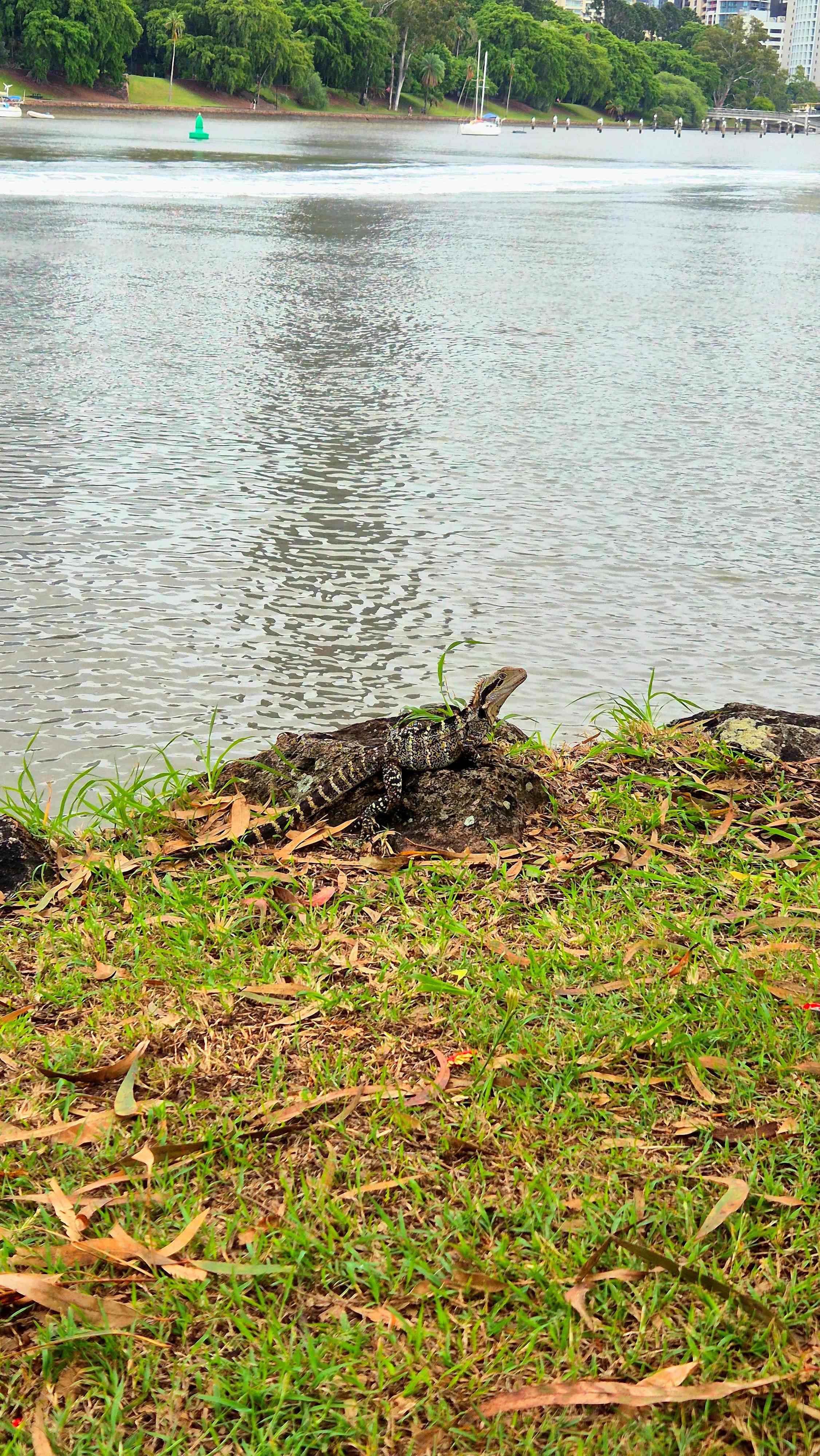
My time in Brisbane was also personally unforgettable. I greatly enjoyed the sunny weather, the variety of ever-present animals, the magnificent smell of trees, and some of the most amazing sunsets I have ever seen. Watching flying foxes while thinking about Hendra virus was probably one of the most infectious-diseases-specific ways to enjoy Australian wildlife.
Of course, not every part of the journey was easy. One of the unexpected challenges was actually getting home from Australia, as several flights were cancelled due to the unstable situation in the Middle East. In the end, this became one more memorable part of the whole experience.
 If I were to give advice to someone pursuing a similar career pathway, I would encourage them to actively seek international experience, mentorship, and collaboration. Visiting another research centre can be transformative. It allows you to see different ways of thinking, different approaches to teamwork, and different models of research organisation. Most importantly, it helps you realise that good science is built not only on ideas, but also on people, trust, communication, and shared enthusiasm.
Overall, the observership became one of the most important experiences in my development as a researcher. The knowledge and perspectives I gained at UQCCR are already being implemented in my work at my home institution. Our research projects are developing more rapidly, and we have also started building a more structured research team.
For this, I would like to sincerely thank Professor Jason Roberts, the Antimicrobial Optimisation Group, and everyone at UQCCR who dedicated their time and energy to showing me how high-quality clinical research can be done. I am deeply grateful for the opportunity, and I hope this experience will serve as a foundation for future collaboration between our institutions.